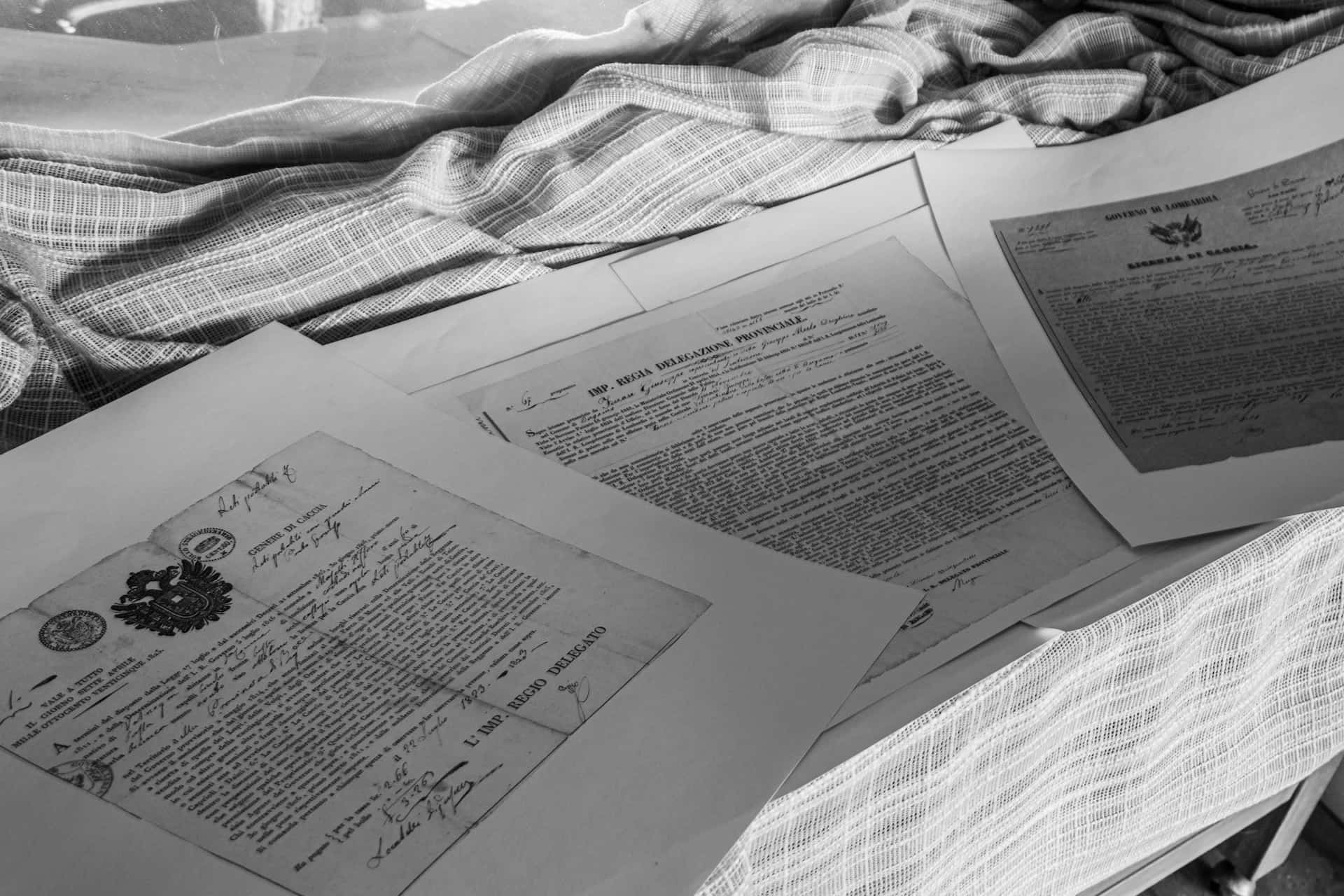
Direct Answer Summary: A certified translation includes a signed statement from the translator or agency confirming it is a true and accurate translation. A notarised translation adds a UK Notary Public who verifies the signer’s identity, not the translation quality. A sworn translation is produced by a court-authorised “sworn” translator in certain countries, and it is not a standard UK status.
If you are submitting documents to UKVI, HM Passport Office, a UK court, a university, or an overseas authority, the wording “certified”, “notarised”, and “sworn” can quickly become confusing. In the UK, acceptance is usually driven by the receiving organisation’s policy. The key is to match the format to what the authority actually asks for.
This guide explains what each term means in the UK, when you might need notarisation and an apostille, and how to avoid common rejection issues. If you want help choosing the right option, Translatewiz can advise before you order. We also provide certified translations and legal translations that follow UK-style certification requirements.
Certified Vs Notarised Vs Sworn Translation: The Quick Difference
- Certified Translation: A translator or translation agency signs a certificate confirming the translation is accurate and complete.
- Notarised Translation: A UK Notary Public verifies the identity of the person who signs the certificate, usually the translator or an agency representative.
- Sworn Translation: A court-authorised “sworn translator” produces the translation in certain countries. This is not a standard legal status in the UK.
At-a-Glance Comparison Table (What It Is, Who Signs, What It Proves, Where It’s Accepted)
| Type | What It Is | Who Signs Or Stamps | What It Proves | Common Use Cases |
|---|---|---|---|---|
| Certified | A translation with a signed certification statement attached. | Translator or translation agency. | Accuracy and completeness of the translation, plus translator details. | UKVI submissions, universities, employers, registrars, and many UK administrative uses. |
| Notarised | A certified translation where the signature on the certificate is notarised. | Notary Public (adds a notarial certificate and seal). | Identity of the signer and authenticity of the signature, not translation quality. | Overseas authorities, some banks, and certain cross-border legal or corporate processes. |
| Sworn | A translation produced by a court-authorised translator under a country’s legal framework. | Sworn translator (country-specific status). | Legal status in that country, often accepted like an “official” translation. | Civil-law countries with sworn translator registers, often for courts and public administration. |
What Is A Certified Translation (UK Meaning)?
In the UK, a “certified translation” usually means a translation that comes with a signed certificate. The certificate confirms the translation is a true, accurate, and complete rendering of the source document. It is not the same as a “certified true copy” of a document.
Many UK organisations accept certified translations because the certificate identifies who translated the document and provides an accountability trail. For immigration-related uses, check the latest requirements on GOV.UK (UK Visas and Immigration) and your specific route guidance.
What The Certification Statement Should Include (Accuracy Declaration, Date, Signature, Contact Details)
A strong UK-style certification statement is simple and specific. As a minimum, it should include:
- Accuracy Declaration: A clear statement that the translation is true and accurate to the best of the translator’s knowledge and ability.
- Translator Or Agency Details: Name, address (or business address), email, and phone number.
- Signature: The translator’s or authorised agency representative’s signature.
- Date: The date the certification is signed.
- Source Document Identification: What was translated (for example, “Birth certificate, full version, issued in [Country], document number X”).
Example UK Certification Wording (Template):
“I, [Name], certify that I am fluent in [Source Language] and English, and that the attached translation of [Document Name] is a true and accurate translation of the original document presented to me.
Translator/Agency: [Name]
Address: [Address]
Email: [Email] | Telephone: [Phone]
Signature: ___________________
Date: [Date]”
Tip: If the receiving authority asks for a specific phrase, match their wording as closely as possible. If they ask for “translator’s credentials”, add a short line (for example, relevant experience or membership). Avoid claiming statuses that do not apply in the UK, such as “sworn translator”, unless it is genuinely relevant in that country.
When Certified Translations Are Usually Required (UKVI, Universities, Employers, Registrars)
Certified translations are commonly requested for:
- UK Immigration And Nationality Submissions: Supporting documents such as birth certificates, marriage certificates, bank letters, and police certificates.
- Universities And Professional Bodies: Transcripts, diplomas, and reference letters.
- Employers And Background Screening: Qualification evidence, employment letters, and ID documents.
- Registrars And Administrative Processes: Civil status documents being reviewed for official records.
If you need a UK-ready certified translation, start with Translatewiz certified translation services. You can also browse all services if you are unsure which option applies.
What Is A Notarised Translation?
A notarised translation is usually a certified translation that has then been taken to a Notary Public. The notary adds a notarial certificate and seal. This confirms they have verified the identity of the person who signed the translator’s certificate, or they witnessed the signing.
This is often requested for cross-border use where the receiving country or organisation wants extra formality. In the UK, notarisation forms part of wider authentication practice. It is separate from any check of translation quality.
What The Notary Actually Verifies (Identity/Signature) Vs What They Do Not Verify (Translation Accuracy)
- What A Notary Verifies: The signer’s identity, the fact they signed, and the authenticity of that signature.
- What A Notary Does Not Verify: The linguistic accuracy or completeness of the translation itself.
This distinction causes a lot of confusion. Notarisation can satisfy a foreign authority’s formal requirements, but it is not a “quality guarantee” for the translation.
For general UK guidance on certifying documents and signatures, see GOV.UK, Certifying a document. It also helps clarify the difference between certifying copies and certifying signatures, which people often mix up with translation certification.
When Notarisation Is Requested (Overseas Authorities, Banks, Certain Legal Processes)
You are more likely to need notarisation when:
- The Document Is Going Abroad: Many overseas authorities request notarisation as part of their acceptance policy.
- An Embassy Or Consulate Specifies It: Some consular procedures list notarisation explicitly.
- A Bank Or Corporate Recipient Demands It: This is common where anti-fraud controls apply.
- You Are Handling Cross-Border Legal Documents: For example, certain powers of attorney or company documents submitted overseas.
If you think you need notarisation, ask the receiving authority this exact question: “Do you require a notarised translator’s certificate, a notarised copy of the original document, or both?” The answer changes the workflow and cost.
What Is A Sworn Translation (And Why It’s Different From The UK System)?
A “sworn translation” usually refers to a translation produced by a translator with a country-defined legal status. They are often appointed or authorised by a court or government body. This is common in many civil-law systems.
Key UK point: The UK does not have a single national “sworn translator” status that automatically makes a translation official everywhere. Instead, acceptance depends on the receiving authority’s policy. In many cases, a properly certified translation is enough unless notarisation or legalisation is requested.
Countries That Use Sworn Translators (Civil-Law Systems) And How “Court-Approved” Translators Work
In countries with sworn translator systems, translators may be registered with a court, ministry, or official list. Their stamp and signature can carry legal weight in that jurisdiction. The translation may be treated like an “official” document for administrative purposes.
Common terms you may see include:
- French: “Traducteur assermenté”.
- Spanish: “Traductor jurado”.
- Italian: “Traduttore giurato” (often involving a sworn statement process).
If an overseas authority says “sworn translation only”, treat that as a country-specific requirement, not a UK certification label.
If You’re In The UK But Need A “Sworn” Translation For Abroad: Practical Options
If you are in the UK and a foreign authority insists on a sworn translation, your options are:
- Use A Sworn Translator Recognised In That Country: This may mean ordering from a translator based in that jurisdiction.
- Ask If Notarised Plus Apostilled Is Acceptable Instead: Some authorities accept a UK certified translation that is notarised and then apostilled.
- Confirm The Exact Acceptance Policy In Writing: Ask the receiving office what wording they expect on the translation or certificate.
Translatewiz can help you sense-check what is being asked, and produce a UK-certified translation suitable for notarisation and legalisation where required. Use Translatewiz contact to share the receiving authority’s wording before ordering.
Notarisation Vs Apostille Vs Legalisation: How They Relate
Notarisation, apostilles, and legalisation are related but different steps. They are often used together when a document will be presented abroad.
- Notarisation: A Notary Public verifies the identity and signature of the person signing a declaration or certificate.
- Apostille: A certificate issued under the Hague Apostille Convention that confirms the origin of a public document so it can be recognised in another member country.
- Legalisation (Consular): Additional authentication via an embassy or consulate, usually used when the destination country is not covered by the Apostille Convention or requires extra steps.
When You Need An Apostille (Hague Convention) And When Consular Legalisation May Apply
If your destination country is part of the Hague Apostille Convention, an apostille is often the standard method of legalising a UK public document for overseas use. You can read the international basis at the Hague Conference on Private International Law, Apostille Convention (1961).
From a practical UK perspective, the official process is explained here: GOV.UK, Get your document legalised (apostille).
Typical workflow (common scenario):
- Step 1: Get the translation certified correctly in UK format.
- Step 2: If required, notarise the translator’s signature or a related declaration.
- Step 3: If required for overseas use, apply for an apostille (or consular legalisation) on the notarial document.
Important: Some authorities want the apostille attached to the notary’s certificate, not to the translation itself. Others want the apostille applied to the original document. Always confirm how the bundle must be prepared.
Need Help?
Struggling with official documents in another language?
Our certified translators can help. We provide UKVI-accepted certified translations with fast turnaround, delivered digitally or by post.
Call 033 0133 2482Which Type Do You Need? (Decision Guide)
Use this quick guide, then confirm with the receiving authority where possible.
For UK Immigration (UKVI): What’s Typically Accepted
- Most Common Requirement: A properly certified translation with translator details and an accuracy statement.
- Not Usually Required: Notarisation or apostille, unless route guidance explicitly asks for extra formality.
- Best Next Step: Check your route guidance and UKVI pages on GOV.UK (UKVI), then order a certified translation in the same layout as the original.
If you need immigration document translation locally, you can view Translatewiz location pages such as London, Birmingham immigration document translation, or Abingdon immigration document translation.
For Courts And Solicitors: What’s Typically Requested
Court and solicitor requirements vary by matter type, jurisdiction, and how the document will be used. Often, you need a certified translation that is suitable for a hearing bundle or disclosure.
- Typical Ask: Certified translation with clear page numbering and a certificate that identifies the source document.
- Sometimes Asked: A translator’s affidavit or statutory declaration, especially if the translation will be relied upon as evidence.
- Practical Tip: Ask whether the court or solicitor needs a statement-of-truth style declaration, or a certified translation for administrative use.
For a neutral overview of how courts and tribunals are structured in the UK, see the Institute for Government courts and tribunals explainer. For translation support, start with Translatewiz legal translation.
For Overseas Use: Checking The Receiving Authority’s Exact Wording
When documents are going abroad, the receiving authority’s wording is what matters in practice. Before you pay for extras, ask:
- Do You Require Notarisation? Confirm whether they need a notary’s seal on the translator’s certificate or on a separate declaration.
- Do You Require An Apostille? Confirm whether the destination country accepts apostilles and where it must be applied in the bundle.
- Do You Require A Sworn Translator? If yes, ask for a link to their policy or a sample accepted translation format.
Common Documents And The Usual Translation Format
Below are common document types and the usual approach. Requirements still vary, so treat this as a starting point.
Birth Certificates, Marriage Certificates, Divorce Documents
- Usually Needed: Certified translation with a full reproduction of stamps, seals, notes, and marginal text.
- Often Important: Consistent spelling of names and places across all documents, especially if you have multiple certificates.
- Sometimes Needed For Overseas Use: Notarisation and then an apostille on the notary’s certificate.
Passports/ID, Police Certificates, Academic Transcripts
- Passports And ID: Certified translation of the biographical page or relevant sections, including document numbers and expiry dates.
- Police Certificates: Certified translation that preserves formatting and any reference numbers or QR codes (where present).
- Transcripts: Certified translation with tables kept legible, often with a clear note explaining grading scales if the issuer provides one.
Contracts, Powers Of Attorney, And Company Documents
- Contracts: Legal translation with consistent terminology and clear handling of defined terms.
- Powers Of Attorney: Often involves notarisation and possibly an apostille, depending on the destination country and institution.
- Company Documents: Often need formal presentation and may be combined with corporate signing requirements.
How The Process Works (Step-By-Step)
Most projects follow a predictable workflow. Knowing the steps helps you plan, especially if notarisation and legalisation are involved.
Providing Scans Vs Originals, Formatting, Stamps, And Bundling
- Step 1, Send A Scan: In many cases, a clear scan or photo is enough, as long as every page and stamp is visible.
- Step 2, Confirm The Target Use: UKVI, court, university, or overseas authority, because this drives the certification and any notary step.
- Step 3, Translation And Checks: A good process includes proofreading and a final completeness check against the source.
- Step 4, Certification Pack: The certificate is attached, and pages are usually presented as a single bundle (often with page numbers).
- Step 5, Notary And Apostille (If Needed): The notary witnesses or verifies the signature, then the bundle can be sent for an apostille where required.
Practical formatting tip: If the original contains stamps, signatures, handwritten notes, or embossed seals, the translation should reflect them clearly (for example, “Round blue stamp: [text]”). Missing stamp text is a common reason for rejection.
Turnaround Times And What Affects Cost
Turnaround time and cost depend on length, complexity, language pair, and format. In general:
- Certified Translations: Often quicker, especially for standard personal documents.
- Legal Or Technical Documents: Take longer due to terminology and cross-checking.
- Notarisation And Apostille: Add time because you are coordinating additional professionals and an external processing step.
If you want a quick quote and the right certification level from the start, submit documents via Translatewiz order. If you have questions first, see Translatewiz FAQs.
Mistakes That Cause Rejections (And How To Avoid Them)
Rejections are frustrating, and they are usually avoidable. Here are the most common issues and how to fix them.
Missing Certification Wording, Incomplete Pages, Mismatched Names/Dates, Poor-Quality Scans
- Missing Or Vague Certification: Include a direct accuracy statement, signature, date, and full contact details.
- Not Translating Stamps Or Annotations: Translate stamps, marginal notes, and handwritten entries in brackets.
- Incomplete Document Sets: Provide every page, including the back page if it contains notes or registration details.
- Name Variations Across Documents: Flag differences early so the translator can add a clarifying note where appropriate.
- Low-Resolution Scans: Use a flat scan or well-lit photo, ensure all corners are visible, and avoid cropping seals.
- Confusing “Certified Copy” With “Certified Translation”: A certified copy relates to the original document copy. A certified translation relates to translation accuracy.
Pre-Submission Checklist:
- All Pages Included: Front, back, and any annexes.
- All Stamps And Seals Visible: Including embossed marks where possible.
- Names And Dates Cross-Checked: Against your application forms.
- Certificate Present: With signature, date, and contact details.
- Correct Level Of Authentication: Certified only, notarised, or notarised plus apostilled, as required.
FAQs
Can A Solicitor Certify A Translation?
A solicitor can certify certain documents and signatures in the UK, but that does not automatically make a translation “certified” in the way most receiving authorities mean it. In most cases, the translator or translation agency certifies the translation using a declaration of accuracy.
If a receiving authority specifically requests a solicitor to certify the translator’s signature, or to certify a copy of the original document, that is a different requirement. For general background on who can certify documents, refer to GOV.UK, Certifying a document, then follow the receiving authority’s instructions.
Do I Need A Wet-Ink Signature And Stamp?
Sometimes. Some organisations accept a printed signature on a PDF. Others ask for a wet-ink signature and, occasionally, a stamp. This is policy-driven, not a single UK-wide rule.
- If The Authority Says “Original Certified Translation”: Assume they want a physical copy with an original signature unless they confirm otherwise.
- If You Are Submitting Online: Ask whether a digitally delivered certified PDF is accepted.
Will A Digital/PDF Certified Translation Be Accepted?
Often yes for online applications, but not always. Acceptance depends on the receiving authority’s submission method and document policy. If the authority later asks for originals, you may need to provide a hard copy with the certification statement.
If you are unsure, Translatewiz can advise on what many UK bodies typically accept and prepare the certification pack accordingly. Start with contacting Translatewiz and tell us where you are submitting the document.
How Do I Know If I Need Notarisation Or An Apostille?
Ask the receiving authority two questions:
- Do You Need Notarisation? This relates to the signature on the translator’s certificate or a related declaration.
- Do You Need An Apostille (Legalisation)? This relates to international recognition, often for documents used abroad under the Hague Convention framework.
Then verify the official process for apostilles via GOV.UK, Get your document legalised. If you are dealing with an overseas authority, also confirm whether the destination country accepts apostilles under the HCCH Apostille Convention, or whether consular legalisation applies.
How To Order The Right Type Of Translation
To get the right outcome with minimal back-and-forth, gather these details first:
- Where You Will Submit The Translation: UKVI, a university, a court, or an overseas authority.
- What The Authority Calls The Requirement: Certified, notarised, apostilled, legalised, or sworn.
- Submission Method: Online upload, post, or in-person appointment.
- Deadline: Especially if notarisation or an apostille is involved.
Then:
- Order Certified Translation: Use Translatewiz order to upload your scans and select certified translation.
- Request Legal Formatting Where Needed: If it is for solicitors, contracts, or formal submissions, choose legal translation.
- Ask About Notary And Apostille Workflow: If your recipient is overseas, share their wording via Translatewiz contact so you do not pay for unnecessary steps.
Quality And Trust Note: Requirements vary by authority, so Translatewiz focuses on clear, complete translations with correct certification wording, careful formatting, and secure handling of your documents. If you are unsure, ask first. It can save time and prevent rejection.
Fun Fact: Why “Sworn” Matters More Abroad Than In The UK
In many countries, a sworn translator is appointed by a court and their stamp carries legal weight. In the UK, acceptance is usually driven by the receiving authority’s policy, so a clear translator’s certificate is often enough unless a notary or apostille is requested.
Conclusion
In the UK, a certified translation is the standard format for most official uses because it provides a clear declaration of accuracy. A notarised translation adds identity verification by a Notary Public, which is mainly useful for overseas recipients. A sworn translation is typically country-specific and not a universal UK designation.
If you tell Translatewiz where the translation is being submitted and what the receiving authority has asked for, we can help you choose the right format and produce a compliant certificate. Get started via Translatewiz order, or contact Translatewiz for guidance before you submit.
Ready to get your documents translated?
Get an instant quote and have your certified translation delivered in as little as 24 hours. Accepted by UKVI, NARIC, courts and universities.